
English| EUR
Suggested for you
More currencies
Choose a language
Dolphins navigate Alghero's coastal waters using a sophisticated visual system adapted for both underwater hunting and surface awareness. Their eyesight rivals many terrestrial mammals in clarity, though it operates under constraints most land animals never face. This guide explains how dolphin vision functions, what researchers have measured, and what those capabilities mean when you're watching them off Sardinia's northwest coast.
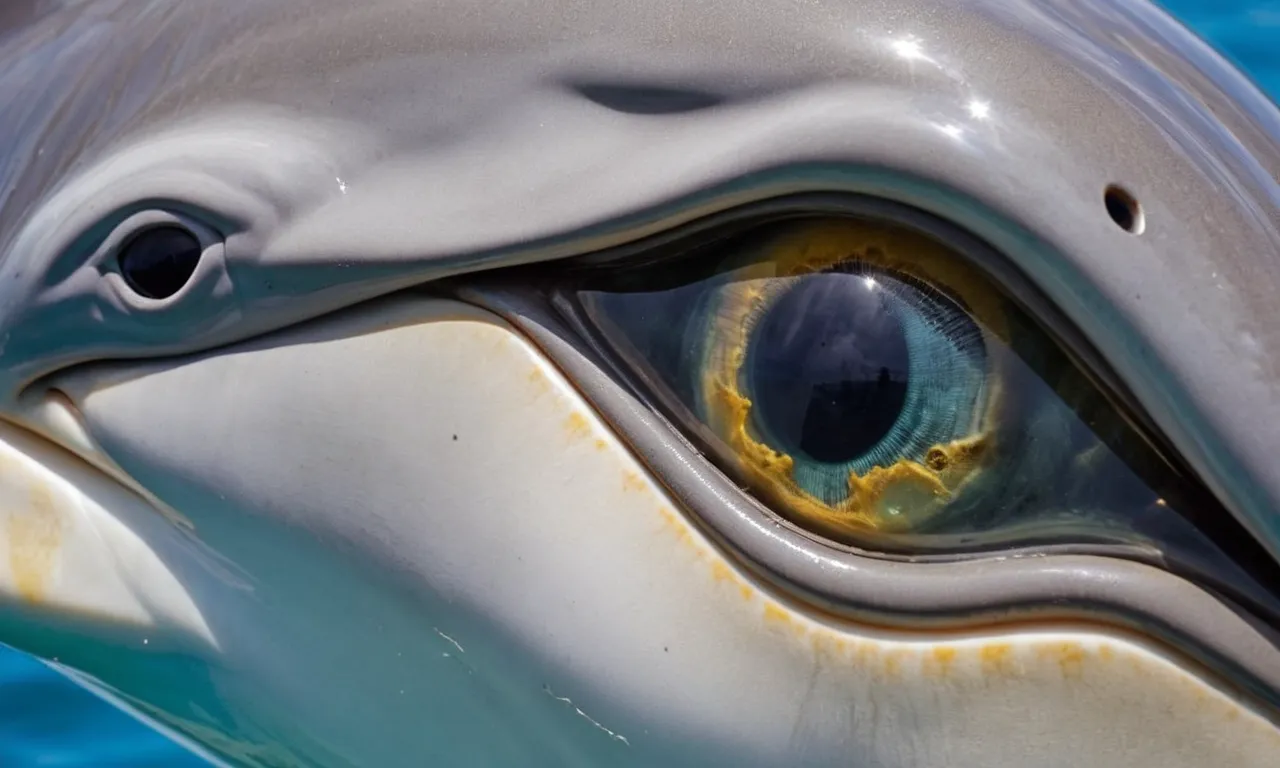
Quick answer
Dolphins possess excellent eyesight both underwater and in air, with visual acuity comparable to cats and significantly sharper than dogs. Each eye operates independently, providing nearly 360-degree coverage, and their retinas contain specialized cells that adapt rapidly between the bright surface and dim depths. While they see primarily in blue-green wavelengths and have limited red perception, their motion detection and low-light performance exceed most marine mammals.
A bottlenose dolphin can spot a fish from fifteen meters away in water that would render a human diver nearly blind. That capacity reflects millions of years of evolution in an environment where light behaves nothing like it does on land. Water absorbs red wavelengths within the first five meters of depth, scatters blue light unpredictably, and creates a visual field where contrast and movement matter more than color. Dolphin eyes sit on the sides of the head, each one moving independently to track separate targets. The lens is spherical rather than flattened, a shape that compensates for the refractive difference between water and the eye's internal fluid. When a dolphin surfaces, that same lens adjusts within seconds, allowing clear vision in air—a flexibility most marine mammals lack. The retina contains both rods for low-light sensitivity and cones tuned to shorter wavelengths, which explains why do dolphins have good eyesight in the blue-green spectrum that dominates underwater illumination. Researchers have documented dolphins recognizing human hand signals at distances exceeding twenty meters and distinguishing between objects that differ by less than two centimeters. Off Alghero's coastline, where the Mediterranean reaches depths of sixty meters within sight of shore, dolphins rely on this visual precision to coordinate group hunting and navigate submerged rock formations. The tapetum lucidum—a reflective layer behind the retina—amplifies available light, giving dolphins a measurable advantage during dawn and dusk foraging periods. Observers on morning tours departing from Banchina Rafael Catardi often note how quickly dolphins locate baitfish schools near the surface, a behavior that depends as much on sharp eyesight as on echolocation. Understanding these adaptations changes how you interpret dolphin behavior during an encounter. A dolphin that approaches the boat and holds steady eye contact is processing visual information with acuity that matches your own, even if the color palette it perceives differs from yours. The independent eye movement means a dolphin can watch both the boat and a nearby fish simultaneously, a multitasking ability that proves essential in a three-dimensional hunting environment where threats and opportunities arrive from any angle.
“A bottlenose dolphin can spot a fish from fifteen meters away in water that would render a human diver nearly blind.”
Bottlenose dolphins in Alghero's coastal waters rely on highly specialized ocular adaptations to navigate their dual-world environment. These evolutionary mechanisms allow them to maintain clear sight both beneath the waves and above the surface.
In bright daylight, the dolphin's iris narrows to form two small slits instead of a single round opening. This mechanism helps the eye transition between the refractive properties of air and water.
Underwater light refraction is different from that in the air, which would normally make marine mammals severely nearsighted above water. Dolphins use muscles to alter their lens shape, ensuring sharp focus when they surface.
Dolphins can process separate visual fields by moving their laterally placed eyes in different directions. This monocular ability allows them to look for threats or prey on both sides simultaneously.
The tapetum lucidum sits behind the retina, reflecting light back through photoreceptors to double light capture. This layer improves their vision when hunting at night or in the deep waters of Sardinia.
Cetaceans lack the short-wavelength sensitive cones found in most land mammals, rendering them cone monochromats. Their visual system is optimized for contrast and light intensity rather than a full spectrum of colors.
The dolphin retina features two distinct areas of densely packed ganglion cells that provide high-resolution vision. This allows the animal to focus sharply in both the forward and lateral visual fields.
Research shows that dolphin photoreceptors are most sensitive to wavelengths around this value, which corresponds to the blue-green spectrum. This spectral tuning matches the dominant wavelengths of light that penetrate oceanic waters.
Because dolphins are famous for their sophisticated echolocation, many people assume they lack functional eyesight. In reality, their visual system is highly developed and works together with their acoustic senses to navigate both marine and aerial environments.
MythDolphins cannot see clearly and rely only on echolocation
FactEcholocation and eyesight function together. Dolphins have sharp vision both under the surface and in the air, allowing them to locate targets visually even without sending out sound waves.
MythDolphins see blurry shapes when they look out of the water
FactDolphins have specialized muscles that reshape their lenses to adjust for light refraction. This adaptation provides them with clear focus in both aerial and aquatic environments.
MythDolphins perceive the ocean in the same colors as humans
FactDolphins lack the photoreceptors needed to see colors like red. Their eyes are optimized for the blue-green spectrum, which is the only light that penetrates deep into their habitat.
The meeting point for dolphin watching excursions in Alghero operates daily from morning until early afternoon.
The meeting point for dolphin observation activities is located at Banchina Rafael Catardi in the Alghero port area. Visitors can easily access the waterfront on foot from the historic center or by vehicle via the coastal roads leading toward the harbor.
From Alghero historic center towards Banchina Rafael Catardi
SP94 or SP105 to Alghero harbor area
Local taxi service to Banchina Rafael Catardi
Plan to arrive between 09:30 and 10:00 to complete the check-in process before the morning tour departs. This window ensures you have sufficient time to locate the meeting point and prepare for the departure.
Everything you need to know about do dolphins have good eyesight
Dolphins possess excellent vision both above and below the water, which helps them navigate the coastal waters around Alghero. Research suggests they have well-developed eyes adapted for marine environments to locate prey and monitor surroundings.
While echolocation serves as a primary tool for hunting and mapping, do dolphins have good eyesight that works in tandem with sound to provide a complete picture. Their sensory systems overlap to ensure they remain highly aware of their habitat.
Yes, their eyes are capable of focusing in the air, allowing them to remain observant near the surface. Researchers often wonder do dolphins have good eyesight when looking at boats, and current evidence shows they can track movement above the water line effectively.
Boat tours provide opportunities to see these mammals in their natural environment. During these excursions, you can witness how they use their senses to interact with the sea and surrounding vessels.
Dolphins possess a reflective layer behind the retina that enhances their light sensitivity, meaning they can navigate effectively in murky water. This feature ensures that do dolphins have good eyesight even when light penetration is limited at certain depths.
Visitors planning to see these animals should arrive at Banchina Rafael Catardi between 09:30 and 10:00. This arrival window ensures guests check in promptly for tours, keeping the process efficient for everyone involved.